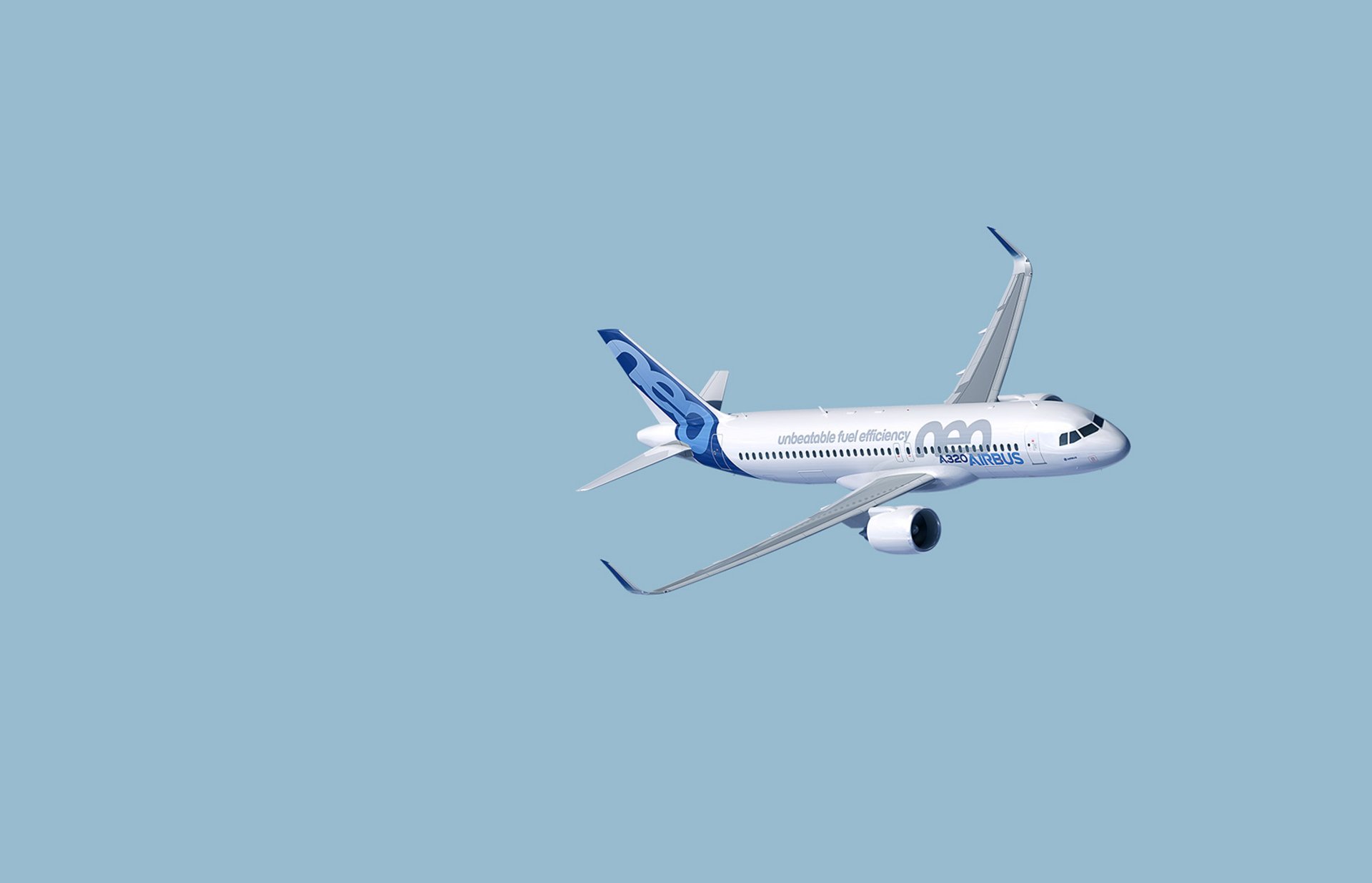
The Airbus A320 is one of the most popular short- and medium-haul commercial aircraft of the last 30 years. Capable of carrying a maximum of 220 passengers, it evolved to a more efficient and surfing model: the A320neo. In this post we tell you more about this aircraft in whose program MyM Group participates.
A fluttering start
The A320 was launched on the aerospace market in 1984 with the great novelty of being the first commercial aircraft model with a flight control system. If you’re wondering what this means, imagine replacing the train controls (levers and hydraulics) with digital electronic controls with fly-by-wire joysticks.
This system in turn eliminated the need for a flight engineer on board the aircraft, but it brought its own complications. Pilots had to get used to working with these new controls, which caused some incidents (on test flights) due to the unfamiliarity of the drivers in those early months. Nevertheless, the aircraft’s comfort and fuel efficiency helped to increase its popularity.
The “new” A320, the most popular in its class
The A320 model appeared looking to fill the segment of short-haul customers using its competitors, the Boeing 727 and 737, with an aircraft that could consume 50% of what these machines needed. The first version of the A320 was released in March 1984, with its first manned flight on February 22, 1987.
Since then it held the record as the world’s best-selling airline aircraft for several years. However, in 2011 the A320neo, a direct upgrade of the A320, appeared on the market. This crowned it as the new sales favorite.
I’m like you, but better
How do you beat the aviation companies’ favorite aircraft? Easy, you promise them the same thing but with fuel savings. The A320neo (New Engine Option) was designed in 2010 and features more powerful International LEAP-1A or Pratt & Whitney PW1000G engines. They make less noise than their predecessors (very important if you intend to sleep on board), allow travel at higher altitudes and are more fuel efficient.
The A320neo also features sharklets (or shark tips on the wings) that allow fuel savings of up to 15% on short hauls and 17% on long hauls. These wing extensions may seem like a piece of cake, but they allow the aircraft to fly from 3,080 km to 3,350 km on short trips and from 5,700 km to 6,200 km on long trips on the same tank of fuel.
The airframe as such was not manipulated, as many consider the A320 to be one of the most comfortable to fly and travel in existence.